Skip to content
← Journal Essay · 8 min

Why the lace motif keeps
returning to my work.

A fusion of fragility and strength.
By Nikolina March 2024
Why the lace motif keeps returning to my work

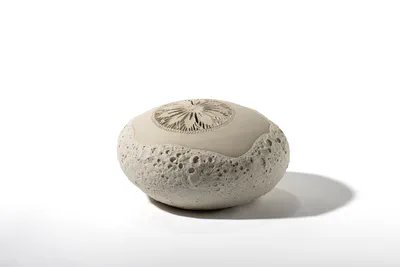
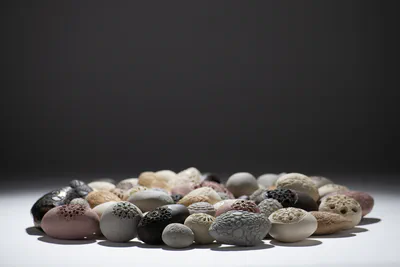
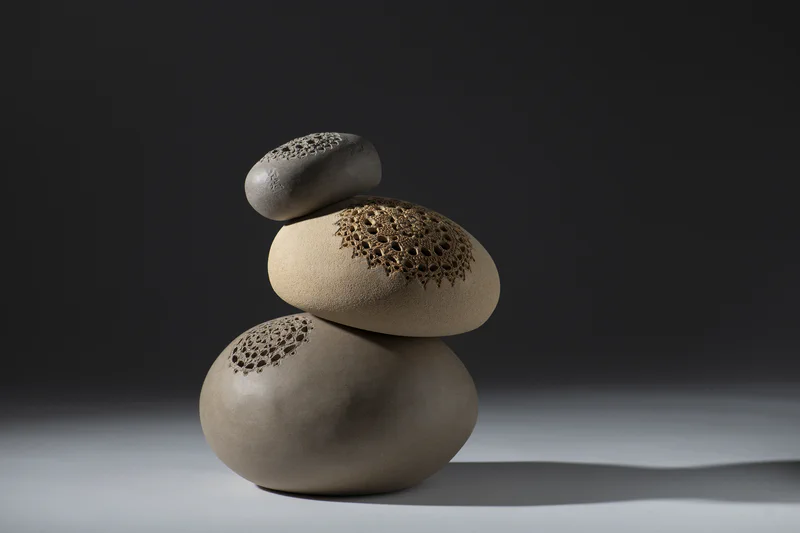
Lace on stoneware · studio, 2024

Ceramics is an art form rooted in contrasts — in softness and durability, in permanence and fragility. When I began experimenting with lace motifs in my ceramic sculptures, these opposites started to take shape in a tangible and deeply expressive way. Lace, with its refined patterns and delicate beauty, brings something unique to the world of ceramics — and that is why I keep returning to it.

01

The fusion of softness and strength

Lace is traditionally associated with gentleness and elegance — it is often used in clothing or interiors to soften a space or introduce a sense of femininity and romance. On the other hand, ceramics are hard, unyielding, and become almost eternal once fired. By transferring the lace motif into ceramic sculpture, I add a touch of softness to that hardness — creating a dialogue between the fragile and delicate look of lace and the solid, enduring nature of fired clay. In this contrast, I sometimes feel I am able to re-examine the very notion of fragility. People often associate lace with something transient and vulnerable, but within ceramic sculpture, the motif takes on a new kind of resilience.
02

Lace as a symbol of tradition and memory

Lace carries a history that connects many people with memories of family, heritage, or cultural customs. One can picture a lace tablecloth passed down through generations, or lace adorning a wedding dress. These associations make lace a deeply symbolic pattern. By incorporating it into my work, I feel I am weaving layers of memory and tradition into my sculptures.

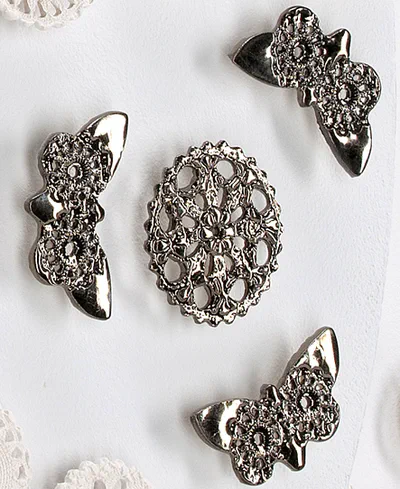
Porcelain butterflies rendered as jewelry
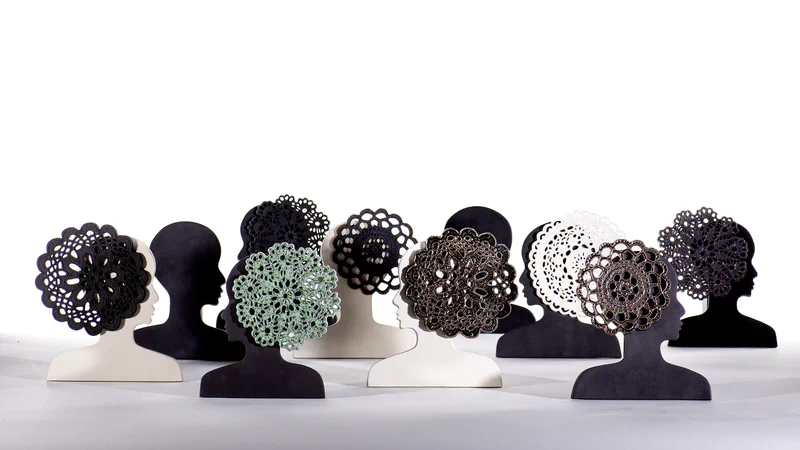
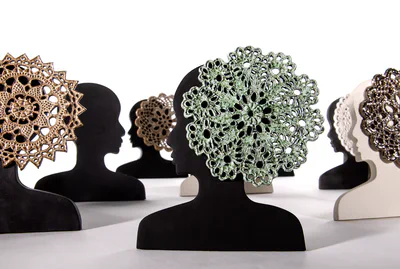
Silhouette faces imprinted with lace pattern
03

The challenge and reward of translating textile into clay

The texture and detail of lace are a real challenge to translate into ceramic — and that is exactly what draws me to it. The techniques I use allow for constant experimentation. Sometimes I thin the clay to the point where it mimics the transparency of real lace — walking the fine line between structure and breakability. Other times, I use thicker lines to emphasize certain patterns. This degree of control over the depth, spacing, and delicacy of the motif allows me to continuously explore it in new and inventive ways.

04

The play of light and shadow

One of the most magical effects that lace brings to a ceramic surface is the play of light and shadow. Relief textures cast shadows that dance across the surface of the sculpture, and when I carve or pierce the clay to evoke the perforated lace pattern, light can pass through the openings. This gives the sculpture a dynamic quality — it becomes part of its environment, changing with time, light, and the viewer’s perspective.

Pierced clay · light passing through the perforated lace pattern

Pierced clay · light passing through the perforated lace pattern

05

Highlighting femininity through strength

Lace’s association with femininity is undeniable. But when translated into ceramics, it goes beyond traditional ideas of beauty and fragility. It speaks to the strength that exists within softness — to the resilience hidden within grace. In a world where ceramic art is often perceived as decorative, I use lace to highlight the strength of womanhood hidden in the softness of this traditionally feminine motif.

06

An homage to craftsmanship

Lacemaking is a skill that demands patience, precision, and time — qualities that perfectly mirror the process of shaping ceramics. By incorporating lace into my work, I pay tribute to that craftsmanship and to the hands that have shaped it over the centuries. In a way, my work becomes a dialogue between two mediums — a conversation through time between those who crafted lace and those who mold clay. Both require dedication, focus, and a deep respect for detail, and I feel a profound connection with those who have created lace by hand.

"Each sculpture featuring a lace motif is an invitation to the viewer to explore these themes, to discover their own meanings, and to find unexpected strength in what is so often perceived as delicate."
And finally

For me, the lace motif in ceramic sculpture is a powerful and poetic symbol — it embodies a beautiful interplay of opposites: fragility and resilience, memory and presence, tradition and innovation. Returning to the lace motif again and again, I feel as though I am building a bridge between worlds — where the softness of lace can be solidified, memorialized, and, paradoxically, made unbreakable. As an artist, this fusion of ideas keeps me constantly inspired — because each sculpture tells a story that is partly mine, but hopefully also one in which others can see themselves.